By Paul Rozycki
If 2025 offered any guidance, 2026 will be a year of challenging and unpredictable events.
While there are a number of things that are sure to draw our attention in national politics this year, it’s worth taking a look at what we might face on the state and local level as we enter 2026, too.
Michigan’s U.S. Senate seat
With incumbent Democratic Senator Gary Peters not seeking re-election, a number of candidates are lining up to replace him. For the Democrats Abdul El-Sayed, State Senator Mallory McMorrow, and U.S. Rep. Haley Stevens are currently declared candidates. For the Republicans former U.S. Rep. Mike Rogers has already filed to run. A number of other names have been mentioned and may well join the fray to replace Sen. Peters. The deadline for filing is April 21.
U.S. House 8th District
Michigan’s 8th District, which includes Flint, Saginaw, Bay City and parts of Midland, is currently held by Democrat Kristen McDonald Rivet, who is in her first term. The 8th District is one of the 13 districts in the nation that Trump carried in 2024 that is currently held by a Democrat.
The district is rated as leading Democratic by most analysts, and prior to McDonald Rivet it had long been represented by a member of the Kildee family. But, by every measure, this could be a very competitive race and the incumbent is already running ads for her campaign.
In 2023 the Cook Partisan Voting Index rated the district at the median one of the nation, with 217 districts being more Democratic and 217 being more Republican. So far Amir Hassan, a former federal law enforcement officer, is the only Republican who has filed to run against McDonald Rivet.
Michigan Governor
Michigan Democratic Gov. Gretchen Whitmer is term-limited, and there will be a hard fought campaign to replace her in the coming election.
At this point there are a number of candidates running, including both parties and an independent candidate.
For the Democrats, incumbent Secretary of State Jocelyn Benson and Genesee County Sheriff Chris Swanson. are seeking the nomination. Potential Republican nominees are former Attorney General Mike Cox, Anthony Hudson, U.S Rep. John James, former House Speaker Tom Leonard, Michigan Senate Minority Leader Aric Nesbitt, Ralph Rebandt at time of publication. There are also a few lesser-known candidates in both parties that may raise their profiles by the time nominees are decided in the August primary.
What may make the already crowded race even more unpredictable is that Detroit Mayor Mike Duggan is running as an independent, and will likely pull many votes from Detroiters, potentially taking votes from the Democratic candidate.
Michigan Secretary of State
Like Gov. Whitmer, incumbent Democratic Secretary of State Jocelyn Benson is term-limited. Seeking to replace her are Democrats Barbara Byrum, Aghogho Edevbie, Lt. Gov. Garlin Gilchrist, Adam Hollier, and Suzanna Shkreli. Timothy Smith is seeking the Republican nomination.
The nominees will be chosen at the state party conventions rather than in a primary. Both parties will be holding “endorsement conventions” in the spring, and will hold formal nominating conventions in the late summer, after the August primary elections.
Michigan Attorney General
Incumbent Democratic Attorney General Dana Nessel is also term-limited. Seeking the nomination for the Democrats are Karen McDonald, Oakland County Prosecuting Attorney; William Noakes, Trial Lawyer; Eli Savit, Washtenaw County Prosecuting Attorney; and Mark Totten, Department of Justice Attorney.
Republicans seeking the nomination are Matt DePerno, Attorney; Kevin Kijewski, Defense Attorney; and Doug Loyd, Prosecuting Attorney, Eaton County. Nominees for both parties will be chosen at state party conventions in late summer.
Michigan House and Senate
This year will also see elections for the 110 seats in the state House and the 38 seats in the state Senate. Currently, Democrats have the majority in the state Senate, and Republicans have the majority in the state House.
For the Michigan Senate, incumbent Democrat John Cherry (27th District) is running for reelection and Republican Bill Bain of Flushing Township is running for his party’s nomination.
For the state House, Democrat Cynthia Neeley represents the 70th District in Flint, Democrat Jasper Martus, represents the 69th district in western Genesee County and Republican Dave Martin represents the 68th district in eastern Genesee County, and all are running for reelection.
Statewide proposals and ballot initiatives
At this time there is one proposal that is certain to be on the ballot and three possible measures for the voters in 2026.
As required by law, November’s ballot will include a proposal for a new state constitutional convention.
The three other measures that may be on the ballot if they get enough valid signatures in time include a proposal to require an additional 5% tax on high incomes to fund public schools; a proposal to prohibit individuals or organizations who have contracts with the government from donating to political campaigns or committees; and a proposal providing that only U.S. citizens can vote in elections.
Other proposals, such as a provision for rank-choice voting that garnered some attention earlier this year, did not make the cut for 2026 but may be on the ballot in 2028.
Flint Mayor’s race
Based on Flint’s city charter, the Flint Mayor’s election now takes place in the same year as the gubernatorial election. So far incumbent Mayor Sheldon Neeley is the only declared candidate. Genesee County Commission Chair Delrico Loyd, who was considering running, said he will not do so.
If needed, the primary will be held on Aug. 4.
Flint City Council and more
All nine Flint City Council seats are up for election in 2026, with a primary in August as needed. Though the City Council finally broke its 4-4 deadlock with the election of Third Ward Councilwoman LaShawn Johnson in August, some conflict remains and the next election may help resolve it.
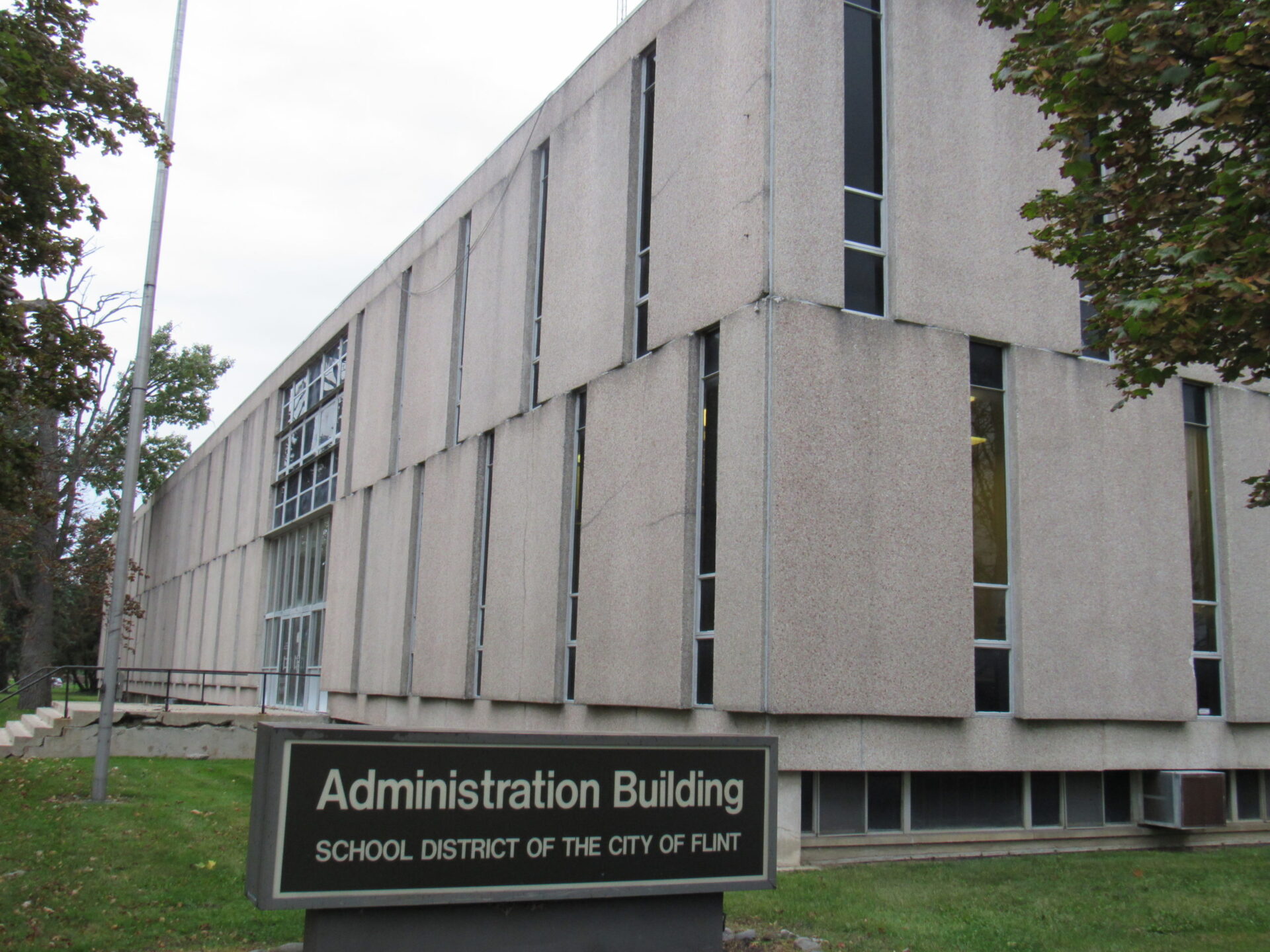
There will also be elections held for judges, the Flint Community Schools Board of Education, and the Mott Community College Board of Trustees.
For all of these elections there may be more candidates who emerge and others that may drop out before the summer primary and the November general election.
Beyond the elections
While elections and the politics surrounding them maydominate the news this year, there are other issues in Flint and Genesee County that might matter just as much to locals, like a new high school, a possible megasite, and Flint’s water settlement payouts.
As reported in East Village Magazine, the Mott Foundation’s commitment to building a new Flint high school has generated much excitement and hope for the future of Flint Community Schools. Yet, even as plans move forward, there remains some controversy over the design of the new building and the preservation of the historical architecture of the old Flint Central High School.
One of the more contentious issues in the county this year has been the proposal to create a large complex in Mundy Township for a possible industrial development. Supporters said that it would create thousands of new jobs and revitalize the local economy, but opponents feared that it would destroy the rural community and the promises of jobs might never be fulfilled. When Sandisk Corporation pulled out of a deal to use the site in early 2025, the hope was that someone else would step in to create the same economic development. We will see if that happens in 2026.
And, after a dozen years, the Flint Water Crisis may reach a conclusion in 2026 as the settlement funds for those harmed are beginning to be dispersed. As reported by Michigan Public, more than 26,000 individuals are scheduled to receive a share of a $600 million fund set aside by the state of Michigan, the City of Flint, McLaren Hospital, and Rowe Professional Services as a result of lawsuits over the water crisis.
Though the payouts have begun, some residents remain frustrated with the response to the water crisis and many who were harmed will not receive compensation — or much less than they expected — as part of the settlement.
In summary, while it’s true that the national midterm elections will dominate the headlines for much of the year as Democrats attempt to regain control of the U.S. House and Senate, Michigan elections and state and local issues may prove just as important.
As was the case in 2025, there will certainly be surprises this year. But with all that’s at stake, 2026 will be more important than most mid-term election years and deserves our most critical attention.
Editor’s Note: This article originally ran in East Village Magazine’s January 2026 print edition. It has been updated to note that Lieutenant Governor Garlin Gilchrist is running for Secretary of State. At the time of original publication, Lt. Gov. Gilchrist was an announced candidate in the Michigan gubernatorial race.