By Jonathan Hewlett
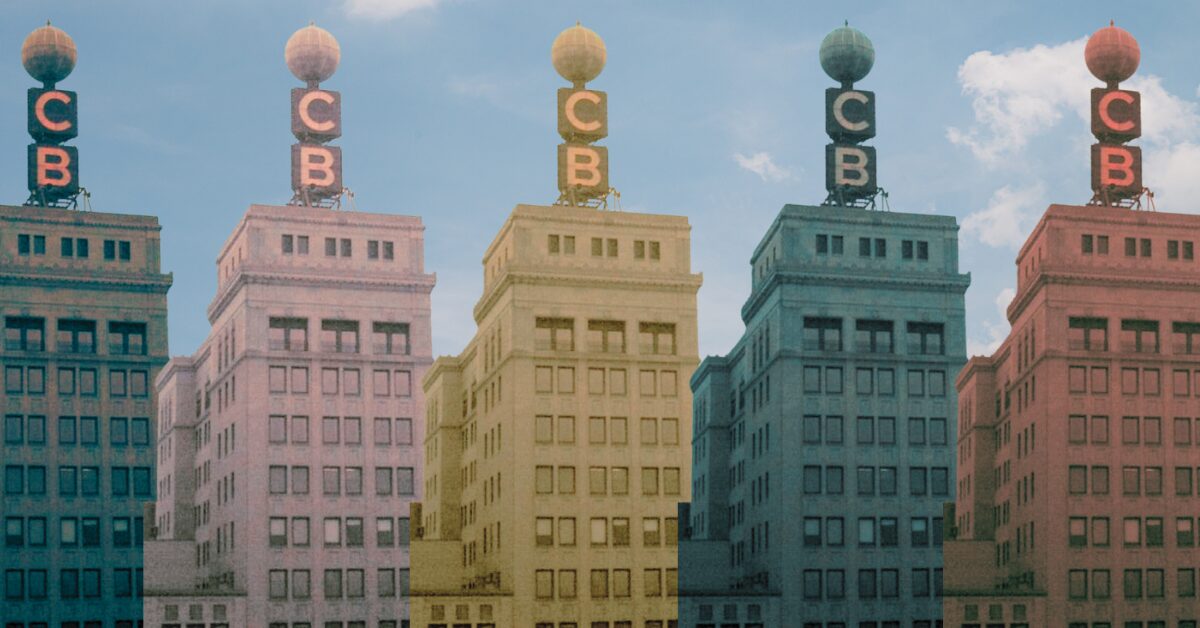
As we inch closer to the 70th birthday of our city’s most prominent icon this August, I thought it would be a good time to look back on the Flint Weather Ball’s former owner and consider the timeline of events that led to the eventual (and dare I say avoidable) downfall of Citizens Bank in the city.
As many long-term area residents know, Citizens Bank was established in 1871 during Flint’s lumber boom. Over time it became a well-established and revered company, both for its service to Flint and Genesee County as well as its donations to various businesses.
Some of the bank’s philanthropic acts included the designation of millions of dollars in loans for small businesses in lower-income communities starting in 1991, the donation of $50,000 to the American Red Cross for the Hurricane Katrina relief fund in 2005, and the now-famous loan to William “Billy” Durant in 1886 which allowed him to kick-start the cart business that later led to the formation of General Motors in 1908.
Over the years, Citizens Bank became one of the largest and strongest banks in Michigan, with strong community ties to Flint.
Unfortunately, the good times were not to last forever.
The institution’s troubles began in 2006 when it acquired Ann Arbor-based Republic Bancorp, Inc. in a $1.05 billion deal meant to grow Citizens Banking Corporation’s footprint through Republic’s large mortgage and financing portfolio.
What I think the higher-ups may have failed to realize in that deal was that Republic had some very significant hidden vulnerabilities in their loan department that were beginning to take their toll.
Soon after the merger of the two companies, the combined Citizens Republic Bancorp began to see quarterly losses continuing through the next several years, including a $195.4 million loss in the last quarter of 2008, another $336.9 million loss in the second quarter of 2009, and a more than $120 million loss by the start of the third quarter in 2010, according to reporting by MLive at the time.
In the midst of these losses, Citizens accepted $300 million in December 2008 from the federally-backed Troubled Asset Relief Program (TARP), as did many other institutions, in the hope of stabilizing the U.S. financial system during the 2008 financial crisis.
Terry McEvoy, an analyst from New York-based Oppenheimer & Co. made the statement in June 2008, “If Citizens had not done that deal, they would not be in this situation they’re in today with losing money and the dividend… But the rationale behind the transaction was to improve the overall value of their banking franchise.”
Following several years of falling stock prices and quarterly losses, the end for Citizens Bank became abundantly apparent when, in August 2012, Citizens reported that they had hired JPMorgan Chase & Co. to find a suitable buyer for the company after failing to repay the $300 million in TARP funding.
One month later in September 2012, Ohio-based FirstMerit Bank announced their acquisition of Citizens Republic Bancorp in a stock-for-stock merger of nearly $912 million. They finalized the merger in April 2013, with FirstMerit repaying Citizens’ $300 million TARP funding and rebranding all former Citizens locations as FirstMerit, thus ending the 142 year run of the Flint-based banking institution. (The rebrand saw the lettering on the weather ball, which Citizens had installed atop its downtown Flint location in August 1956, change from “CB” to “FM”. It was again changed, this time to “HB,” after Huntington Bank acquired FirstMerit in 2016.)
As unfortunate as the downfall of our own hometown Citizens Bank was, it stands to reason that the events that led to its end could have been avoided.
While there were many contributing factors to Citizens’ demise, I personally believe that the doomed merger with Republic Bank in 2006 was perhaps the largest and most damaging factor of all. It seems that even with the strain of the 2008 recession, Citizens may have been in a more stable position to weather that storm without the added pressure of Republic’s loan department vulnerabilities during the financial crisis.
Perhaps Republic’s finances should have been scrutinized more closely by the parties involved, or Citizens could have looked elsewhere for a possible acquisition. Regardless, I think that Citizens Bank of Flint (and its famous Weather Ball logo) may still have been around today had the merger in 2006 not taken place.
So as we look toward the future, let’s all remember the many great things that Flint’s own Citizens Bank did for our community – including constructing the Weather Ball, now a symbol of our city, back in 1956. But let us also take caution and consider the bad business decisions that led to Citizens’ untimely demise so that we can avoid making mistakes that end up hurting our own stability (financially and mentally) over time.
As the philosopher George Santayana stated in his book, “The Life of Reason”: “Those who cannot remember the past are condemned to repeat it.”
Jonathan T. Hewlett works as an Automotive Technician for Belle Tire and attended Mott Community College, studying Computer Science and Networking. His hobbies include local history, vintage computers, music, and model railroading. He has lived in Flint Township his whole life, and wants to spread awareness about Flint’s rich history and rebirth through writing and art.