By Kate Stockrahm
Flint City Council is poised to consider an amendment to Flint’s building code that would require owners of vacant buildings to register those structures with the city.
The amendment comes in the form of an ordinance, dubbed the “City of Flint Vacant Building Ordinance,” which is set to come before the Council’s Legislative Committee tomorrow evening.
The ordinance was originally proposed to Council President Candice Mushatt by members of the Central Park Neighborhood Association (CPNA), and the hope, CPNA member Jim Richardson said, is that it will help “protect the health, welfare, and safety” of Flint residents by encouraging vacant property owners to get structures up to code and occupied.
“It all started, my gosh, now that I’m thinking back, probably a year and a half ago or better,” Richardson said of the ordinance’s origins.
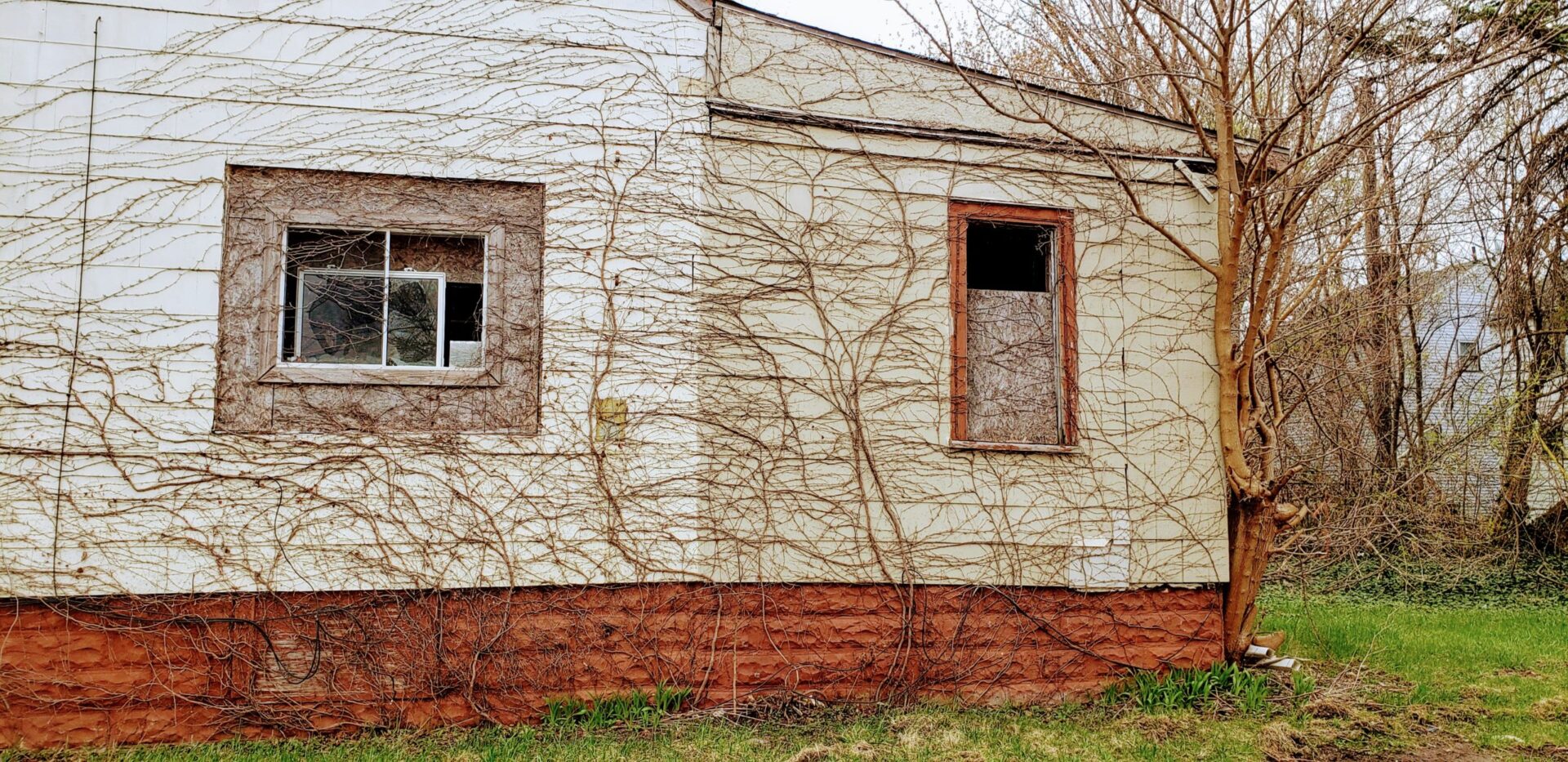
He explained that CPNA had just spent a lot of time and effort dealing with a vacant property over on E. Court Street – “a duplex that was completely abandoned” and owned by “some organization in Florida” which had been doing, in Richardson’s estimation, “absolutely nothing to maintain it.”
The neighborhood had come together to try to keep the property boarded so it wouldn’t end up uninhabitable, vandalized, or set on fire. After a while of not seeing any movement on the property’s rehab, they ultimately lobbied for its demolition and raised funds for its removal – which they succeeded in doing.
“It was gone,” Richardson said, “But what got under our skin was that, here’s a company that came in, bought a house on a speculative basis, did absolutely nothing, and walked away with only the cost of the taxes that they were paying on the property.”
Richardson said they looked around to see plenty of other similar properties across Flint that were in the same state: properties, owned largely by folks or organizations from outside of the Flint community, purchased at a low cost and left vacant and unmaintained in the hope of a future sale or flip at some later time.
In the meantime though, neighbors of those properties are left to deal with vandalism, safety concerns, and the devaluation of nearby homes, Richardson said, and there had to be something CPNA could do.
“We said ‘This is not right,” he recalled. “‘Is there some way we can take some action against these landlords, [or] these people who own these properties, to encourage or force them to do something with a property – occupy it, or sell it in some way, or tear it down, or be sure to maintain it?’”
So, Richardson and a few other members of CPNA looked into just that. What they found in their research was a host of ordinances similar to the one now before Flint City Council – ordinances that required vacant property registration and a fee – which had been implemented in nearby cities like Southfield, East Lansing, Kalamazoo, and Saginaw.
They brought their ideas and some proposed language to their councilperson, Candice Mushatt, who said she was immediately receptive to such an ordinance, as it also would support the City’s work in trying to identify property vacancies and contact vacant property owners.
“They gave it to me as a proposal and I was like, ‘This is great! We can go with this!” Mushatt recalled. “This problem is all over the city, not just in the Seventh Ward.”
Now, after months of working on the language with the city’s law department, a draft City of Flint Vacant Building ordinance will be up for City Council’s consideration on April 22, 2026.
As presented, the ordinance requires registration of vacant and abandoned properties within 60 days of vacancy; outlines information required on registration forms, inspection processes, and registration requirement exceptions; lists maintenance and security requirements; and implements a $250 registration fee – which can be re-evaluated “from time to time” by the Council.
That fee portion is crucial, Richardson noted, as it’s the factor he and his neighbors hope will encourage property owners to keep properties occupied and cared for.
“The goal of it was, indeed, to encourage the owners of the property to do something with it by charging additional cost to them for having a vacant property,” Richardson explained, adding that CPNA justifies that cost because “there is a cost to the neighborhood and to the community by the property remaining vacant.”
Richardson cited decreased property values for homes and businesses adjacent to vacant structures, the risk of fire, and the scrapping and vandalism Central Park neighbors have gotten too used to. But, he emphasized, the goal of the ordinance isn’t to punish owners, but to encourage them, as he wants to see more neighbors and less blight.
“We need rental properties, and we need investor-owners who have properties that make properties available affordable,” he concluded. “We need affordable housing units in the city… and we encourage the occupancy of it. So if an investor will get a house up to code and rent it out in our neighborhood, we’d be delighted to have it.”
Flint City Council’s Legislative Committee is scheduled to meet at 5 p.m. tomorrow in City Council Chambers on the third floor of Flint City Hall, located at 1101 S. Saginaw St.