By Flint. Daily. and EVM Staff
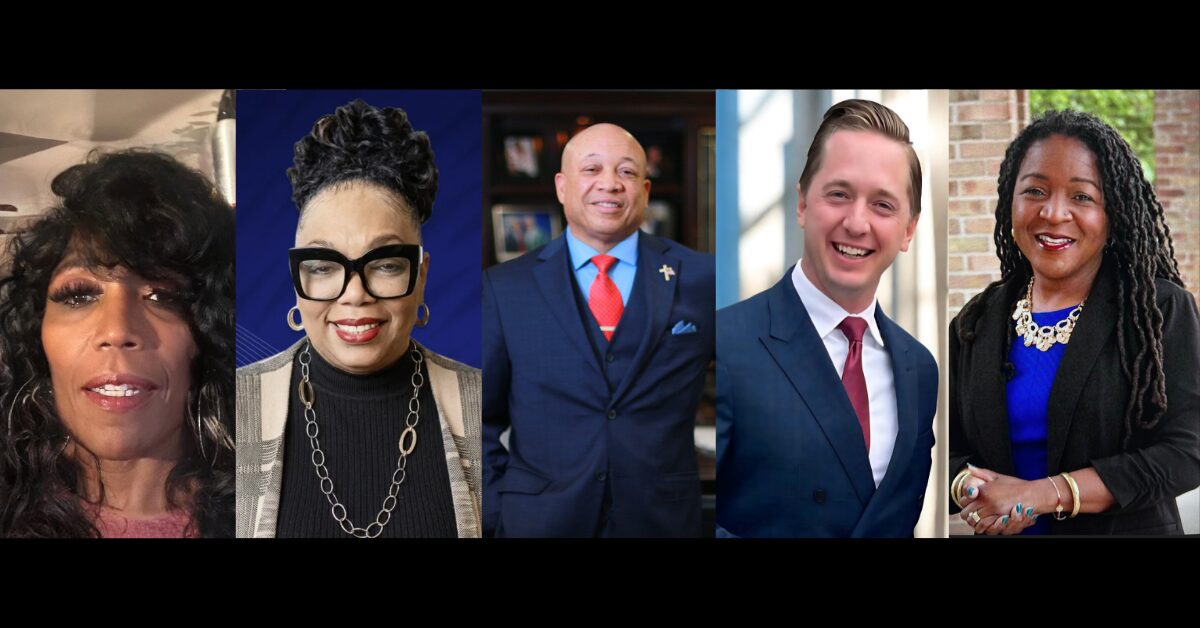
Voters in the Aug. 4 primary election in the City of Flint have five mayoral candidates to choose from – four who made the ballot and one official write-in candidate.
Two candidates, incumbent Mayor Sheldon Neeley and current Sixth Ward City Councilwoman Tonya Burns, have both held elected office in Flint while three newcomers, Linda Anthony, Micaiah Owens, and Roshanda Womack, are working to establish their platforms with the city’s voters.
The top two vote-getters in the primary will advance to face each other in the general election on Nov. 3. All five candidates responded to a questionnaire by East Village Magazine and Flint. Daily. leadership that was designed to provide readers with a brief snapshot of each candidate’s background, experience, history and connection with Flint, priorities should they win their seat, and thoughts on recent examples of Flint City Council votes. Their responses are listed alphabetically by last name below.
In addition to the mayoral primary, voters in Flint’s First, Second, Fifth, and Eighth Wards will narrow down City Council candidates to two per ward for the Nov. 3 general election. For this primary election series, 20 mayoral and council candidates were contacted with 18 providing responses in total. Only first ward City Council candidates Cynthia Haynes and Debra Coleman did not participate. All candidates in a primary, including certified write-ins, were contacted at their publicly-available email address and phone number listed on their filing forms to take part in this series.
(More background about the questionnaire, our methodology, and the partnership between East Village Magazine and Flint. Daily. is available in our story announcing the collaboration earlier this month.)
For questions about the series or our methodology, please reach out to us at team@flintdaily.news or eastvillagemagazineflint@gmail.com.
Age:
- Linda Anthony: 63.
- Tonya Burns: Not provided.
- Sheldon Neeley: 57.
- Micaiah (Mic) Owens: 36.
- Roshanda (Shani) Womack: 54.
Occupation/relevant professional experience:
- Anthony: Pastor for 23 years, bus driver.
- Burns: I was elected in 2021 as the Sixth Ward councilwoman, and proudly served since. Prior to that, I worked in economic development for the city of Flint. I worked 20+ years in the security & alarm industry. I was the first female and Black owner of a licensed ADT dealership in Michigan & Illinois. My primary focus was security systems & cameras for residential and commercial and also fire systems.
- Neeley: Incumbent Mayor; professional in broadcast engineering; served as a high school counselor, a career and technical counselor, and also as a counselor at a runaway shelter. I also did a brief stint with JobCorps and served on Flint City Council as well as State Representative.
- Owens: Attorney at law, practicing municipal (local government) law, litigation, contracts, real estate, estate planning, and other areas of law.
- Womack: Former Experiences: Youth and family prevention worker and home visitor, school counselor, clinical therapist and pastor. Current Occupation: Professional Storyteller and Curriculum Developer.
Education:
- Anthony: Flint Northern High School 1980 graduate; pastoral graduate; full-time mom and wife graduate.
- Burns: I went to Flint Public Schools, and then the Detroit College of Business, Davenport University, and then I switched over to Madonna University where I was studying teaching.
- Neeley: Flint Public Schools – Flint Northern all day long! – with an associates degree in communications and liberal arts. I also attended Saginaw Valley for one year.
- Owens: I hold a bachelor’s degree (Pensacola Christian College), a Master of Jurisprudence degree (Michigan State University College of Law), and a Juris Doctor degree (Michigan State University College of Law).
- Womack: BA Psychology and Sociology, MA Counseling and Ordained Elder.
What boards or community organizations have you been involved with?
- Anthony: Gospel church
- Burns: I’ve been over-involved my entire life and had to resign from some boards when I took my council seat. Council was technically a part-time job, but it’s literally full time. My commitment has always been to the people. And I kept that commitment. I get calls 24 hours a day, seven days a week, almost all the time. I always tell people, ‘If something happens, call 911, then call me.’ When people trust you, they call you. And we should be able to trust our elected officials.
- Neeley: I chair the DDA Board and serve on the MEDC Executive Committee. I also work with the Flint & Genesee Chamber and was on the MTA Board.
- Owens: As a municipal attorney, I advise multiple Michigan municipal boards, commissions, and councils upon the proper way to run their respective governments, as well as draft ordinances (laws) for, review contracts for, and litigate on behalf of these governmental bodies.
- Womack: Truth Racial Healing and Transformation Practitioner – Community Foundation, MI Faith in Action – Flint, The Poor Peoples Campaign, Women Without Walls – Board member, Flint Community Read – Planning Team, American Youth Soccer Organization (AYSO) – Coach and Team Parent, The Flint Chapter of the Gospel Music Workshop.
How long have you lived in Flint?
- Anthony: 58 years.
- Burns: I am born and raised in Flint.
- Neeley: 57 years.
- Owens: My wife and I have lived and worked in the Flint area for about six years, and we moved into the city proper a little over two years ago to be closer to family who also live in the city.
- Womack: 49 years (I lived out of state for 5 years while attending Grambling State University).
What neighborhood or area do you live in?
- Anthony: Northside.
- Burns: Sixth ward, but I feel like I’m the council person at large because I’ve always taken calls from all over the city. If you call and you need help, I’m helping.
- Neeley: Northwest. I’ve only lived in two homes my whole life: where I was raised with my mother, father, and my brother, and the house I bought my teenage sweetheart.
- Owens: My wife and I reside in the 7th Ward.
- Womack: Mott Cultural Center, seventh ward.
Do you own or rent/lease a residence outside of the city? If so, how often do you stay there?
- Anthony: Own.
- Burns: Yes, I do, actually outside of the state, but my primary residence is in the sixth ward.
- Neeley: No, but I do own my former family home, also in Flint.
- Owens: My wife and I neither rent nor own a residence outside the city. Flint residents can take confidence in knowing that by electing me they will have a mayor who truly lives in the city he leads.
- Womack: No.
Do you promise voters that you will file your campaign finance statements by all required pre- and post-election deadlines for the primary and general election? If not, have you filed a Reporting Waiver and do you promise voters that your campaign will not receive or expend more than $1,000 in your election bid, per that waiver’s requirement?
- Anthony: Yes.
- Burns: I’m in my fifth year on Council and have never had campaign violations. Filing your campaign finance statements, that’s something that’s required for all candidates to be on the ballot and I have always met those deadlines.
- Neeley: Yes, we have always turned in our finance documents no matter which office I have held.
- Owens: My campaign will strive to comply with all applicable campaign finance laws.
- Womack: Yes.
What things do you enjoy doing or places do you enjoy going in the city for fun or in your spare time?
- Anthony: I enjoy reading, fishing at parks, and going to the Goodwill.
- Burns: I enjoy spending time with my family. For nearly 30 years, I’ve also done what I call the Tour de Flint, taking people around the city to see Flint through my eyes. I show them places like the Sloan Museum, the Planetarium, our beautiful historic homes, and the natural beauty of our parks. Flint has a rich history, and our people are resilient. I also enjoy spending time downtown, where you can have dinner or relax outside. It’s been exciting to see downtown come back, and I’d like to see that same revitalization on Clio Road and the eastside. We may never return to the days of Buick City or Chevy in the Hole, but we can build a thriving city again while creating safe spaces for families.
- Neeley: I like being home, in my backyard, with my family.
- Owens: My wife and I enjoy walking, having/attending family cookouts, visiting with neighbors, and updating our older house. We have a great time going to local restaurants, going for ice cream in the summer and Christmas lights, sledding, and ice skating in the winter. With my wife’s being from Venezuela, she patiently teaches me Latin dance, while I stumble. With my coming from a family of mechanics, I enjoy working on cars and the annual Back to the Bricks. Being Christians, we also prioritize being present with our church body and helping our community monetarily and with our efforts.
- Womack: I enjoy gardening, walking and biking in the summer. I also enjoy singing, listening to live music and great food. I like attending cultural festivals, programs at the Gloria Coles Public Library, Tunes At Noon and Art Walk or plays at the McCree Theatre. I also love spending time with family and friends.
Why did you decide to run for mayor?
- Anthony: I’m a pastor. I have heard the cries of the residents too many times. I decided to step up to the plate to make some changes in the city of Flint. I am also a resident of Flint, so I’ve seen and been through those challenges as well and I know if we can come together as one people in Jesus’ name, we will make this work.
- Burns: I kept my promise to restore trust and confidence in our city, but I’ve done as much as I can from my council seat. I’ve worked to unite the 6th ward, move projects forward, and make investments that outlast my time in office. With ARPA funding, I created the Going Green Tool Shed to help homeowners and partnered with Bethel Church to support a community health center offering screenings, food assistance, and basic care. I’ve supported churches and organizations outside of my ward like St. Mark’s, addressing food insecurity. Real change requires strong leadership. I was concerned by decisions that undermined public trust, like council members voting on funding for nonprofits they were connected to. I’m running because our community deserves honest government & leadership people can trust.
- Neeley: Originally I ran to save the city I love. Back then we were at an intersection of civil unrest, a financial crisis, and a water crisis. Flint was on the precipice of bankruptcy and making things much worse we had a COVID-19 outbreak looming. There was a list of other candidates wanting to run the city, but where were they in those tough moments? Now the pension system is fixed and Flint is finally on stable financial footing. When we started, our system was only funded at 26%, now we’re at 71% and growing! I’m running again to continue this forward progress. We are on a great trajectory. The city is doing very well, and we’re going to continue that progress because Flint deserves nothing less.
- Owens: As a municipal attorney, I certainly have never desired to be a mayor. However, since moving to the city, I have been troubled by the mayoral administration’s lack of leadership, advocacy, and passion for the city. Due to my legal experience, I quickly noticed simple fixes that would help our city. As I dug deeper, I became more displeased. I realized that our mayoral leadership has embraced an attitude of “good enough for Flint” rather than casting a vision for a better Flint. In December 2025, after much prayer, I felt called to leave my law practice to serve the people of our city as mayor.
- Womack: I am running for mayor because Flint is home. I have served this community as a counselor, minister, mother, storyteller, advocate, and neighbor. I have stood with families during crises, helped distribute water and food, worked with young people and the incarcerated. I’ve used my voice to call for justice, unity, equity, and inclusion. My campaign is about three things: safe communities, strong families, and honest government. We will prevent violence before it happens, invest in our children and families, and make sure City Hall works for the people again. Flint does not need more division. Flint needs healing, accountability, and leadership that listens. We will make Flint better with Womack.
What separates you from other candidates in the primary election?
- Anthony: Me and my late husband have opened our homes to the residents of Flint. We have helped the residents of Flint out of our own pocket expecting nothing in return. We’ve reached out to the homeless and to many children, fed the hungry, and also gave them prayer. Never did we turn anyone away. I’m different not because of a name, but because of the love that I’ve given to the residents of FLINT, the same love that God has given me and my family.
- Burns: Anyone willing to throw their hat in the ring deserves respect because they want something good for Flint. What separates me is that I come with experience. I understand how government works, from the city charter and council rules to the Open Meetings Act. Good government creates good policy. I’ve spent years bringing people together at town halls, neighborhood meetings, and listening sessions. I have six neighborhood associations in my ward, so I’m constantly meeting with residents & working to solve problems. I stood with my children, family, friends, and neighbors during the water crisis, protesting in Flint and Lansing because our community deserved better. I’ve also been willing to hold government accountable, whether it’s questioning how ARPA dollars are spent or demanding transparency with public assets. I’ve kept my promises to my constituents, and I want to restore trust and confidence in city government while making sure every decision puts the people of Flint first.
- Neeley: Experience. Being a proven leader and a winner; seven consecutive balanced budgets; and I have brought millions of dollars in economic investments to Flint.
- Owens: I have the competence and the heart to lead our city. As a municipal attorney, I have advised local governments how to run for nearly a decade. I write laws for these governments and represent them in lawsuits, contracts, water / sewer issues, and many other matters. No other candidate, not even the incumbent, has the legal expertise that I bring to the table. More importantly, I have a heart for our people. My heart desires that Flint be a place where people sleep at night feeling safe, knowing they have a good job in morning, to which they drive on clean streets. We can Build Flint Better!
- Womack: First, I believe that attitude reflects leadership. Divisions among leadership impacts the effectiveness of elected officials and how others view our city. However, I will bring a calming presence along with the ability and history to bring people together. Second, I am the only candidate that has presented a research driven, practical, trauma-informed plan to stop the violence in our city before it starts. One of the key components of my whole-of-community plan is to combat income insecurity by increasing the circulation of the Flint dollar (multiplier effect). This will help reduce violent crime by lowering stress, increasing opportunity, and strengthening community supports.
What do you see as the biggest challenges facing the city?
- Anthony: The residents of Flint are struggling to manage the struggles that were not put on them by themselves, but other people. Starting with the Flint water crisis, people are paying for water that almost killed them and are losing their homes due to the decisions outside of their control. Children are hurt from that water, making them unable to regulate their feelings, and make sound decisions, which is the cause of violence in our homes and on our streets. The people of Flint have lost courage and faith for changes to be made by the people in charge.
- Burns: The biggest challenges facing Flint are restoring trust in our water, improving public safety, and rebuilding our neighborhoods. People still don’t trust the water, and they deserve clean, affordable water from the tap. We also have an increase in gun violence, drive-by shootings, and young people becoming involved in crime. We need a comprehensive public safety plan that addresses violence, supports law enforcement, and gives our youth opportunities before the streets get hold of them. We also need to recruit and retain police by offering competitive wages. Beyond public safety, we have to address blight, aging infrastructure, and neighborhood investment. Too many parts of our city have been left behind. Flint has incredible potential, but we need real plans, accountability, and leadership that is willing to talk honestly about our challenges and work with the community to solve them instead of pretending they don’t exist.
- Neeley: Infrastructure. We need to work on more than just roads, we need to cut dangerous trees, we need to repair environmental damages that have brought injustice to our residents, we need to make more investments in our water system to help bring down the cost. We need to continue to remove blight from our city and demolish more condemned buildings. I have already prescribed the medicine for all of these municipal illnesses, but we need to increase the dosage in my next term.
- Owens: 1. Lack of Good Jobs: we need a mayor who fights for investment from large companies and cuts red tape for small businesses. 2. Unsafe Living: we need a mayor who prioritizes safe, affordable water; restoring confidence in our people through transparent testing and communication; and providing adequate, respectful police coverage. 3. Blight: we need a mayor who strategically tackles burned out, dilapidated buildings and enforces our litter laws. 4. Incompetence / Corruption: we need a mayor who understands and respects the law and who makes himself accessible to residents (monthly town halls).
- Womack: The biggest challenge is income insecurity. If we combat income insecurity among youth, it will also help to reduce violent crime by lowering stress, increasing opportunity, and strengthening community support. Income insecurity can push young people toward unsafe informal economies or high-risk peer networks. Paid work gives youth legal income, structure, mentorship, and future-oriented goals. Addressing income insecurity is part of a “Whole-of-Community” violence prevention approach. Government, corporations, entrepreneurs, schools, neighborhoods, churches, community organizations, health providers, families, courts and law enforcement all have a role to play.
What do you see as Flint’s greatest assets or opportunities for the future?
- Anthony: Investing in our children, more jobs, more places to help the homeless, and getting rid of blight on our streets.
- Burns: Flint is what I call a plug and play city for businesses. We have the infrastructure, we have the highways, we have the airport, we have the utilities that are already here. So we just need good businesses to come here. The big question now is data centers, which I voted to put a 12-month moratorium on. Putting a facility right across the street from where people live, it needs to be looked at deeper. For Flint’s future, let’s work to improve our school district, so we’re bringing back kids to our city to grow good paying jobs and livable wages. People who work deserve to have a livable wage and not work three, four jobs to make a living. For me it’s important to bring not just Michigan businesses, but going to Washington. We lost our voice in Washington somewhere along the way, and they forgot that Flint didn’t poison itself. Flint was failed at the local, state, and federal levels. We need to make sure that they are investing back in Flint, and I’m gonna hold them to that.
- Neeley: Some of the greatest assets that we have are the partnerships that we’ve developed. I talk a lot about prayer, planning, and partnership – our partnerships with the municipal government, state government, federal government, philanthropic entities, and also social organizations in our community. The levels of partnerships that we have built have created the current trajectory that we’re on, and we’re winning now.
- Owens: Flint’s greatest assets are our people, location, and infrastructure (so long as we do not delay). Flintstones have always risen above through uniting in the face of adversity: whether it be unionizing, making tanks to fight Nazis, fighting for equality, or advocating for truth in the water crisis, Flint residents continually overcome. Flint will overcome again with leadership that will market and leverage its excellent location for all industries along with our impressive, albeit dated, infrastructure. If we cut the red tape and incompetency, this city will roar back to life.
- Womack: Flint’s greatest assets are our children, our culture and the land. We by all means must respect, protect, and cultivate all three. As Mayor I will create a youth council to provide mentoring and give youth space to express their opinions, concerns and hold me accountable. As Mayor I will create partnerships that enhance and celebrate all cultures within the City of Flint and encourage “Flintstone” pride. As Mayor, I will not enter into any partnership with corporations or businesses that pollute or contaminate our environment. I will protect the land and the people that call Flint home.
What would be your three top priorities should you be elected?
- Anthony: I will first look into the water crisis lawsuit and find out where the residents’ money is. Secondly, I want to develop a mental health division into the police force to support de-escalation tactics and to better support the mental health services of Flint residents. Third, I will create a more sustainable plan to help the homeless in our city.
- Burns: My top priorities are water safety and affordability, public safety, and economic development. First, we’ll focus on clean, affordable water by strengthening our Department of Public Works, continuing the work on infrastructure, and hiring qualified management. We’ll implement a comprehensive public safety plan, which I have been pushing for on Council, that addresses violence, supports police, and provides more opportunities for young people. Third, we’ll grow Flint’s economy by cutting red tape, creating a concierge service for businesses, investing in small business development through the Oak Business Center, and cleaning up blight across every neighborhood. I want people to feel proud of where they live, and I want investment to benefit the people who already call Flint home. These are priorities I will begin acting on from day one with my 100-day plan.
- Neeley: 1. Public Health: We have large health disparities inside the city of Flint, both mental and physical. We’ve got to find ways for government to engage with and help support those individuals. 2. Insurance: We’ve begun to try to tackle insurance issues in the city – whether it be residential, auto, or health. We know programs, like roof repair assistance, aren’t working because insurance mandates are out of control. So, we’re working on a plan to alleviate a lot of the stress about insurance costs for residents.This could help keep people out of foreclosure and keep them in their homes. 3. Utility Costs: We’re looking at ways to reduce costs for residents for essential services, like water, right now. One of the biggest challenges that we have is that the previous administration signed a 30-year agreement (to 2047) with the entity that keeps raising our rates. We have not raised rates on residents but we need to find a way to bring down those costs.
- Owens: I have made available to Flint residents an objective plan based upon the insights that they communicated to me. My full “Build Flint Better Plan” is available on my Facebook and by request (see contact info below). The plan focuses on restoring the foundations of our city by working with the people of our city to establish the following pillars: JOBS (advocate for good jobs and cut red tape for small business), SAFETY (crime and water), BEAUTY (strategic blight removal and infrastructure restoration) through TEAMWORK (with Council and the People) and TRANSPARENCY (monthly mayoral town halls).
- Womack: 1. A Safer Flint: My goal is to prevent violence, improve emergency response, reduce gun access for youth, protect rights, and hold systems accountable. 2. Stronger Families and Youth Opportunity:I will be an advocate for greater funding and investment in education, literacy, mental health, special education advocacy, youth jobs, mentorship, and pathways away from violence and the justice system. 3. Honest Government and Community Growth: I plan to restore trust in City Hall through transparency, professionalism, and respect. I will support responsible development, jobs that pay living wages, equitable spending, and services based on need, not politics.
The Flint City Council recently passed a 1-year moratorium on data center developments in the city. Do you agree with that resolution? Why or why not?
- Anthony: We were not for it due to the water crisis.
- Burns: I got my agenda at 7:36 p.m. on a Tuesday. By the next day, I’d taken so many phone calls, some pro and some against. I did research. China has 457 data centers, the U.S. has 5,427. We need to make sure these are safe. Do they cause higher levels of cancer? How do they affect our nervous systems or health? I looked at Virginia, which has over 400. I looked at North Carolina, Mecklenburg County put a moratorium on, and then they paused it. I looked at Mundy Township, where people said we don’t know if we want these. Do they cause health issues, what do they emit, what are the impacts on air and water? Flint was already poisoned by water, so for me, it was let’s take a pause, let’s study. That’s why I had a town hall with Dr. Brandy Brown, an environmentalist and data center expert, to receive good information. That’s why I voted to put a moratorium on. This election means if we don’t get the right people in November, they can vote to have that moratorium off, and that data center is coming. I’m not into making billionaires more rich, I’m into looking out for the people in this community and their health. (Editor’s Note: As a current City Council member, Burns voted in favor of the moratorium.)
- Neeley: I support the moratorium because the people of Flint want it. At the hearing for this moratorium not one person spoke in favor of data centers. This moratorium gives our city a chance to look into data centers and how they have affected other communities. We can use that information to craft a responsible plan for data centers in Flint.
- Owens: I presented at this meeting on the data center issue. I encouraged Council to adopt a 1-year moratorium (maximum time limit under Michigan case law) in order to allow the city sufficient time to consult experts and to create an ordinance that would comply with Michigan law (which does not allow across-the-board bans) and protect Flint residents. My greatest concern is that the present mayoral administration is not taking the lead on educating itself, the Council, and our people about the complexities, dangers, and alleged benefits surrounding this new type of use. Ignorance is not an option.
- Womack: Flint needs development and jobs, but not at any cost. In short, what are the trade offs and are they equitable, accountable, and do they enhance the well-being of all residents. Yes, I support the 12-month moratorium. It gives the city time to evaluate land use, infrastructure capacity, environmental risk, and community impact. During a moratorium, the city should review zoning rules, infrastructure protections, environmental safeguards, traffic impacts, water and sewer capacity, emergency response needs, and neighborhood effects. We need to take time to talk with residents and industry experts. We should also be reviewing the current research particularly as it relates to community impact.
The Flint City Council recently passed a permanent resolution recognizing June as Pride Month in honor of Flint’s LGBTQIA+ residents. Do you support that resolution? Why or why not?
- Anthony: As mayor, I would want everyone to have a pursuit of happiness.
- Burns: I believe a community should be inclusive. You love who you love, and it’s not my business. It is important that we come together to find a common bond with each other. I have personally seen some friends and family who struggled. One of my best friends is an engineer. She lives in North Carolina now, and she felt she couldn’t tell me. She finally said, ‘I need to tell you something. I am married.’ And she gave the woman’s name. I said, “Okay, as long as you’re happy, I love you for you.’ That’s from my heart. I think we have more things to worry about than other people’s business. I am inclusive. Everyone should be able to feel comfortable and represented in our community and we don’t have the right to exile anyone because of people’s certain beliefs.
- Neeley: Yes I support it, and I’m so happy that City Council caught up. Every year that I’ve been here I pass a resolution and they debate it, they argue it. It finally got to one point I just said: it’s Pride Month because the administration says it is. I don’t care if you do a confirmation vote or not.
- Owens: I was present when this was passed. Council’s contention was not Pride Month, but whether resolutions commemorating months should be approved annually or as automatic-renewal resolutions. Council amended the resolution to include an automatic-renewal provision to avoid having to approve a Pride Month resolution in future years. While I understand the desire for convenience, I have some concern that passing automatic-renewal resolutions rather than annual resolutions can cheapen a commemoration and eliminate the public’s ability to continually track where councilpersons stand on issues.
- Womack: Yes, I do support this resolution because it demonstrates that as a city, we are committed to making sure that everyone feels safe and valued. However, we need to go beyond resolutions that are performative. I believe that there is strength in our diversity. We need each other to make Flint the best it can be. We have to be intentional about bringing down any walls that have historically divided us. The LGBTQIA+ community has a history of enhancing communities in this country. Flint’s LGBTQIA+ residents are a vital part of our community who add to the richness of Flint’s culture and who have invested in the growth of our community. Flint belongs to us all.
Have you ever been charged with or convicted of a violent or financial crime, and if so, how was it resolved? [NOTE: This question is not intended as a judgement on a candidate’s criminal history. We do not believe that a criminal history should be a barrier to anyone holding elected office. Rather, this is an opportunity for a candidate to directly respond to voters regarding any public criminal or financial records that do exist or public accusations that have been made that voters may be aware of.]
- Anthony: No.
- Burns: No, I have not committed any crimes, but I do believe in second chances. In my company, I hired returning citizens to work for me. A felony for child support is not the same as a felony for murder. So that just means I need to get you a job so you can have your child support payroll deducted. So I believe in giving them the opportunity to reintroduce themselves back into the community and have a job. I hired probably 30-40% of my staff in sales as returning citizens. We background checked them, we trained them. On Mother’s Day, my kids don’t want to hold my phone because I still get over 200 Mother’s Day texts from people who used to work for me who I gave second chances to.
- Neeley: No.
- Owens: I have never been charged with or convicted of any crime.
- Womack: No.
Do you have a campaign website or social media pages for voters to learn more about you?
- Anthony: We got a write-in, if you want her to win, write her in, Pastor Linda Anthony.
- Burns: The campaign website is tonyaburnsformayor.com, and there are links to my Facebook and Instagram pages that people can go to, and my contact information is on the website as well.
- Neeley: Facebook.
- Owens: Facebook: Mic For Flint Mayor; Instagram: micforflint; Email: micforflint@gmail.com; Phone: (810) 247-8681.
- Womack: Yes. Website: Electwomack.org, ElectRoshandaWomack on Facebook, ElectWomack on YouTube, ShaniTheStoryteller on Instagram and YouTube.
Lead image caption: The City of Flint’s Mayoral candidates for the 2026 primary election. From left to right: Linda Anthony, Tonya Burns, Sheldon Neeley (Incumbent), Micaiah (Mic) Owens, and Roshanda (Shani) Womack. (Photos courtesy of candidates or candidate’s campaign page)